
Deployable Connectivity
What Deployable Connectivity Really Means for Emergency Response
In emergency response planning, deployable connectivity is a crucial concept. It encompasses the ability to establish reliable communication systems under chaotic conditions. This article explores the meaning of deployable connectivity and why it’s essential for effective emergency management.
Understanding Deployable Connectivity
Deployable connectivity refers to the capacity to mobilize communication systems swiftly during emergencies. It’s a vital standard measured by real-time effectiveness, ensuring coordination and situational awareness.
Why “Deployable” Is So Often Misunderstood
Most connectivity solutions are designed for stable environments, which are rarely present during emergencies. Understanding the differences between a Stable Environment and an Emergency Response Environment is crucial for evaluating the effectiveness of deployable connectivity.
| Aspect | Stable Environment | Emergency Response Environment |
|---|---|---|
| Environmental Predictability | Conditions are generally known and stable | Conditions are unknown or changing |
| Infrastructure Availability | Infrastructure is expected to be available | Infrastructure may be degraded or unavailable |
| Cellular Coverage | Moderate to strong | Low, intermittent, or unknown |
| Network Congestion | Low to moderate | High, unpredictable, or extreme |
| Power Availability | Stable power or reliable power source available | Power limited, unstable, or unavailable |
Solutions that perform well under stable conditions may falter dramatically during emergencies, highlighting the need for robust, adaptable communication systems.
What Deployable Connectivity Actually Means in the First 24 Hours
During real incidents, Emergency Managers must ensure connectivity is operational immediately. This boils down to four non-negotiables:
- No ISP Wait: If connectivity requires a service ticket or ISP provisioning, it’s not deployable. It must work instantly using available networks—cellular, satellite, or both.
- No Complex Setup: The personnel deploying connectivity may lack technical expertise. Systems must be operational within minutes without requiring specialized knowledge or vendor support.
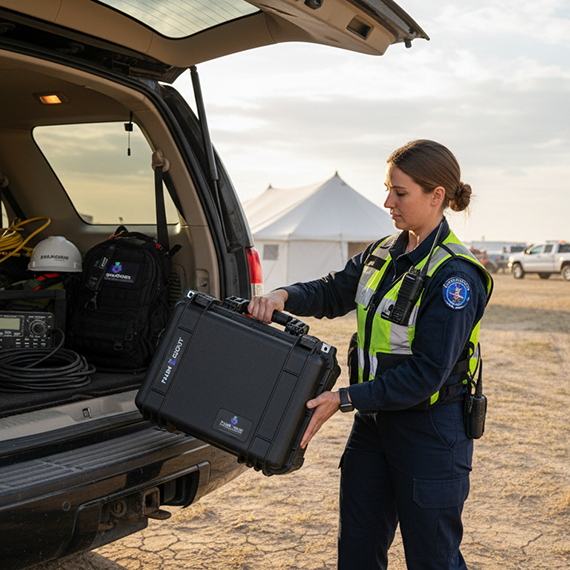
- Field-Proven Durability: Emergency deployments are rugged. Equipment must withstand transport, weather, and improvised setups, avoiding delicate components that risk failure.
- Operationally Validated: The real test of deployability is field use. Solutions must have proven their effectiveness during active disaster responses or infrastructure failures.
Where “Deployable” Solutions Commonly Break Down
Emergency Managers often face solutions that claim deployability but fail due to:
- Hidden dependencies (power, backhaul)
- Overly technical setups
- Single-network reliance
- Poor durability for field use
Each of these pitfalls transforms connectivity from an enabler into a barrier.
Pressure-Testing Deployable Connectivity Before the Incident
To ensure readiness, connectivity solutions should be pressure-tested with questions like:
- Can this be deployed by non-technical staff?
- Does it work immediately without outside coordination?
- How does it perform under network congestion or degradation?
- Is it a trusted and field-proven solution used for real incidents?
If the answers are unclear, the solution may not be deployable when it matters most.
Deployable Connectivity Is About Readiness, Not Features The most dangerous assumption in emergency planning is believing connectivity will “figure itself out” when needed. True deployable connectivity is defined by readiness under pressure, not just speed ratings or feature lists.
Want to See Deployable Connectivity in Action?
Explore real-world case studies showcasing rapid deployment communications during live incidents, including: