
Enhancing Communication Infrastructure for North Carolina Public Health with Plum Case
Overview
North Carolina Public Health Region 2 needed reliable, portable broadband connectivity across 11 departments in Western North Carolina. With a focus on emergency preparedness and public health initiatives, including vaccination clinics and medical sheltering during crises, they needed a solution that could deliver seamless connectivity in remote and mountainous areas.
About
North Carolina Public Health Region 2 coordinates public health services across 11 departments in Western North Carolina. Its work spans routine public health initiatives and emergency preparedness alike, from vaccination clinics to medical sheltering during crises, often reaching some of the most remote and mountainous parts of the state.
Challenge
Challenging Landscape Hinders Connectivity
The rugged, mountainous terrain of Region 2 created connectivity gaps that ordinary infrastructure couldn’t close, and the department’s emergency response work meant those gaps carried real consequences. Any solution had to hold up under adverse conditions and sustain reliable connectivity across multiple devices at once, whether the team was running a vaccination drive or standing up a medical shelter.
Solution
Plum Case Provides Robust Communication Infrastructure
Robert Davis, the region’s workforce development director for a federal grant program, had seen Plum Cases keep a previous health department connected, including through COVID-19 operations where they maintained connectivity across multiple devices. That experience made them the natural starting point for Region 2.
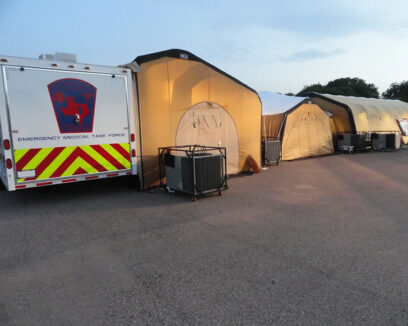
Before committing, the department tested Plum Cases across landscapes that mirrored where the cases would actually be used. Once they proved themselves, Region 2 procured Plum Cases and distributed them across all 11 departments, equipping mobile health trailers with the connectivity infrastructure their fieldwork required.
Outcome
Stronger Emergency Response, Ready to Scale
With Plum Cases in place, Region 2 strengthened its emergency response, giving mobile health trailers dependable connectivity for medical sheltering and mass vaccination drives. Owning their own communication infrastructure also reduced reliance on shared resources, so public health operations no longer competed for connectivity during emergencies.
Looking ahead, the department plans to expand its Plum Case deployment and fold the cases into emergency response exercises, building on a rollout that has positioned Region 2 as a leader in using portable connectivity for public health across Western North Carolina.
Related Case Studies
- Emergency Management & Public Safety
- Mobile Command & Control
- Pop-up Connectivity
- Cyber Incident Response
- Emergency Management & Public Safety
- Emergency Response